Composite Gem Material | Mohs Hardness ~6–7 (after stabilization) | Reconstituted Stone | Stabilized Mineral Aggregate
Material Overview
Sea Sediment Jasper is a colorful stone material widely used in jewelry, especially in bead bracelets and decorative designs. Unlike traditional jasper formed entirely through natural geological processes, sea sediment jasper is generally considered a stabilized or reconstituted gemstone material.
The material is typically created by compressing naturally occurring mineral sediments, crushed stone, and binding agents into solid blocks that can then be cut and shaped into beads and cabochons.
Many pieces are then dyed in vibrant colors such as turquoise blue, coral red, purple, green, or multicolor patterns to produce striking visual effects.
Because of its layered patterns and bold color combinations, sea sediment jasper has become popular in handmade jewelry where design and color coordination are important.
Despite its manufactured elements, the base materials still originate from natural mineral deposits, and the finished product retains the hardness and polish characteristics expected from stone-based jewelry materials.
Geological Background
Traditional jasper is a microcrystalline variety of quartz (chalcedony) formed from silica-rich sediments that slowly solidify over millions of years.
Sea sediment jasper draws inspiration from these natural materials but differs in its formation.
The process generally involves:
• Natural mineral sediment or crushed stone
• Silica-rich fragments
• Binding or stabilizing agents
• Compression into stone blocks
• Dye infusion for color enhancement
The name “sea sediment jasper” refers to the sedimentary appearance of the patterns, which resemble layered ocean deposits or coral reef formations.
However, the material itself is usually engineered from natural stone particles rather than formed directly by geological processes.
Because of this, many gemological references classify sea sediment jasper as a reconstituted stone or composite material.
Mining and Production
The raw mineral components used to produce sea sediment jasper generally originate from regions with abundant jasper or chalcedony deposits.
These materials are processed through several steps:
- Natural stone fragments are crushed or ground.
- Sedimentary mineral material is sorted by color and grain size.
- The material is compressed into solid blocks using stabilizing agents.
- Blocks are dyed to produce distinctive color patterns.
- The stabilized stone is cut into slabs, cabochons, or beads.
Once the material is stabilized, it can be polished much like natural jasper.
This process allows manufacturers to produce consistent patterns and vibrant color combinations that are difficult to find in natural stone.
Geographic Sources
Because sea sediment jasper is a manufactured stone material, its production occurs primarily in lapidary and gemstone processing centers rather than traditional mining operations.
Large quantities are produced in regions known for gemstone cutting and bead manufacturing, including:
• China
• India
• Indonesia
• Thailand
The base minerals themselves may originate from natural jasper deposits found around the world.
Jewelry Performance
Sea sediment jasper performs well in jewelry because of its stabilization process.
After stabilization, the material typically has a hardness similar to natural jasper, usually around 6 to 7 on the Mohs scale.
Advantages include:
• Strong durability for everyday wear
• Excellent polish retention
• Consistent bead shapes and sizes
• Vibrant color patterns
Because the stone is stabilized, it is less likely to fracture than some untreated natural stones with internal weaknesses.
For this reason, sea sediment jasper is especially popular in:
• Stretch bracelets
• Mala bead designs
• Layered stone jewelry
• Statement color pieces
Visual Characteristics
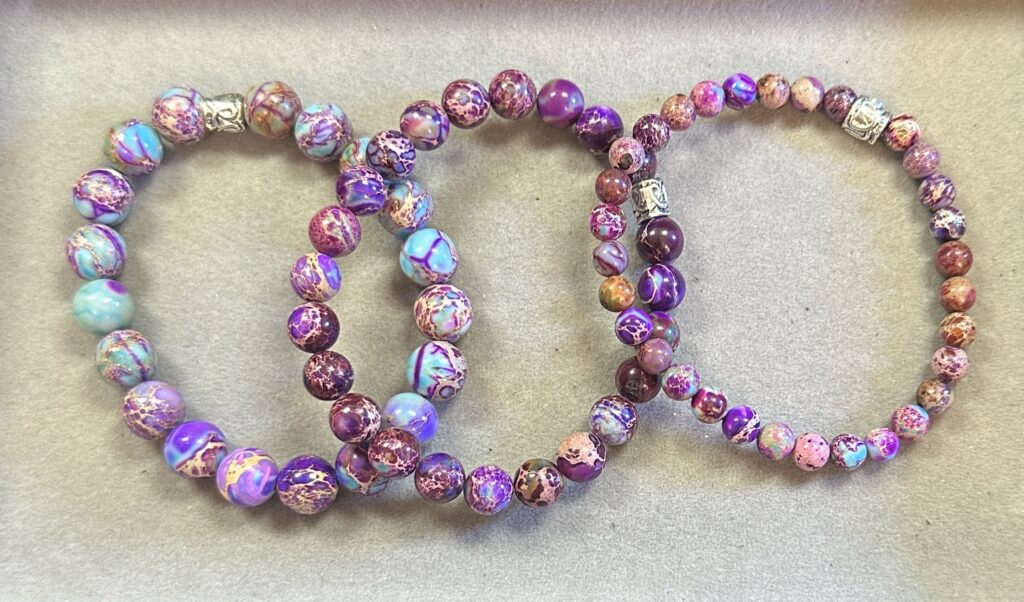
One of the most recognizable features of sea sediment jasper is its network of contrasting veins and layered patterns.
These patterns often resemble:
• Coral reef structures
• Ocean sediments
• Turquoise spiderweb matrix
• Geological cross sections
Color combinations may include:
• Turquoise blue with white veining
• Coral red with cream patterns
• Multicolor rainbow patterns
• Purple or green tones with natural matrix textures
These colors are typically enhanced through dyeing, which allows jewelers to create coordinated designs across multiple pieces.
Spiritual and Symbolic Traditions
In metaphysical traditions, sea sediment jasper is often associated with calming energy and emotional balance.
Some traditions refer to it as a “stone of inner peace.”
Symbolic meanings commonly attributed to sea sediment jasper include:
• Emotional healing
• Communication and clarity
• Stability during stressful periods
• Connection to water and ocean energy
Because many patterns resemble ocean imagery, the stone is sometimes associated with themes of flow, renewal, and balance.
As with many gemstone traditions, these interpretations are cultural and symbolic rather than scientifically verified.
However, jewelry made with natural or stone-based materials often carries personal meaning for the wearer.
Use in Jewelry Design
Sea sediment jasper is extremely versatile in jewelry design due to its wide range of colors and patterns.
It pairs well with both natural stones and metal spacers.
Common combinations include:
• Sea Sediment Jasper with Black Lava Stone
• Sea Sediment Jasper with Tiger’s Eye
• Sea Sediment Jasper with Howlite
• Sea Sediment Jasper with Hematite
Because the stone is often dyed in turquoise shades, it can serve as an alternative to turquoise in designs where cost or availability may be a concern.
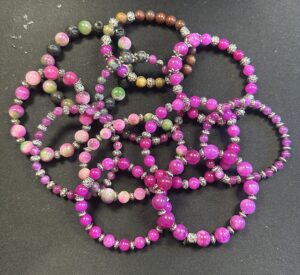
At The Jewelers Bench, sea sediment jasper often appears in bracelets where color contrast is important. Its strong patterns help anchor a design visually while allowing complementary stones to highlight specific tones.
Cultural and Artistic Uses
Beyond jewelry, sea sediment jasper is sometimes used in:
• Decorative carvings
• Cabochons for statement rings
• Beaded necklaces
• Artistic stone inlays
The bold patterns and colors make it especially popular in contemporary handmade jewelry, where artists seek materials that allow for creative expression and coordinated color palettes.
Scientific and Gemological References
For readers interested in gemology and mineral science, the following institutions provide information about jasper, chalcedony, and gemstone classification.
Gemological Institute of America (GIA)
https://www.gia.edu
Mindat Mineral Database
https://www.mindat.org
International Gem Society
https://www.gemsociety.org
Smithsonian National Museum of Natural History
https://naturalhistory.si.edu
These sources provide detailed information about natural jasper and chalcedony minerals, as well as gemstone treatments and stabilization processes.
The Jeweler’s Perspective
From a jeweler’s perspective, sea sediment jasper offers an interesting balance between natural material and artistic design control.
While natural stones provide unique geological character, stabilized materials allow jewelers to work with predictable patterns and vibrant colors that can be difficult to achieve naturally.
When selecting sea sediment jasper beads for jewelry, artisans often evaluate:
• Color intensity
• Pattern consistency
• Smooth polish
• Compatibility with other stones in the design
Because no two beads are exactly alike, even stabilized stones retain a level of individuality within a finished piece.
Closing Notes
Sea sediment jasper occupies a unique place in the gemstone world.
While it differs from purely natural jasper in how it forms, it continues the long tradition of transforming earth-derived materials into decorative objects and wearable art.
Its vivid colors, ocean-inspired patterns, and versatility in jewelry design make it a popular choice for artisans creating bold and expressive stone jewelry.
Whether chosen for its visual appeal, symbolic meaning, or design flexibility, sea sediment jasper remains a distinctive material in modern gemstone jewelry.