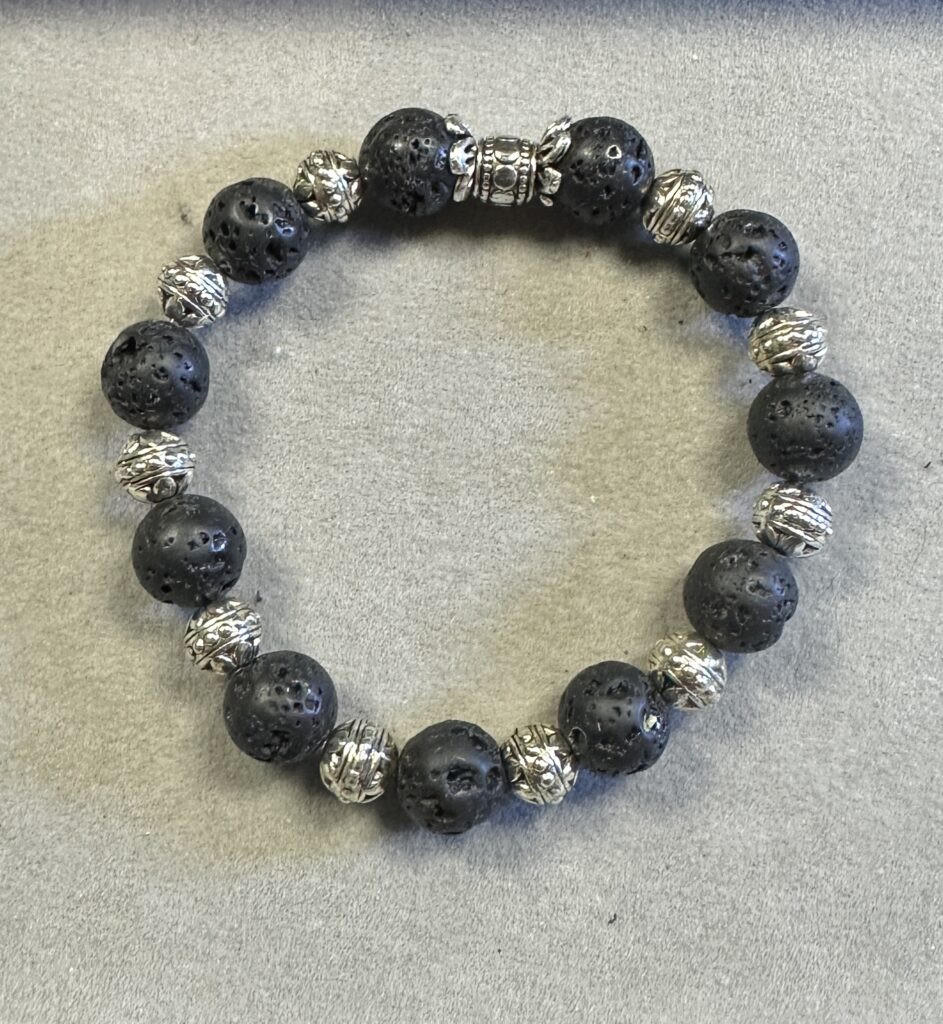
Basalt | Mohs Hardness ~3–4 | Volcanic Igneous Rock | Rapid Surface Cooling
Material Overview
Black Lava Stone is a natural volcanic rock formed when molten lava rapidly cools at the surface of the earth. In geology it is most commonly classified as vesicular basalt, a dark igneous rock containing numerous small cavities created by escaping volcanic gases during cooling.
Unlike crystalline gemstones such as quartz or tourmaline, lava stone is not a single mineral. Instead, it is a fine-grained mixture of volcanic minerals including:
• Plagioclase feldspar
• Pyroxene
• Olivine (sometimes)
• Iron-rich silicates
These minerals crystallize so rapidly during volcanic eruptions that individual crystals are usually too small to see without magnification.
The defining feature of lava stone is its porous texture. As molten lava cools, trapped gases escape, leaving behind small holes called vesicles. These vesicles give lava stone its rough texture and make it lightweight compared to many other stones.
Because of its dramatic origin and distinctive appearance, black lava stone has become a popular material for jewelry, particularly in beaded bracelets and aromatherapy jewelry.
Geological Formation
Lava stone forms during volcanic eruptions when molten magma reaches the surface and becomes lava.
As lava flows across the ground, several rapid processes occur:
- Temperature drops quickly as the lava meets cooler air or water.
- Dissolved gases within the molten rock expand and escape.
- The rock solidifies before large mineral crystals can grow.
This rapid cooling produces fine-grained basalt with trapped gas bubbles that form the porous cavities visible in lava stone.
The vesicular structure varies depending on:
• Gas content of the magma
• Cooling speed
• Lava flow thickness
• Environmental conditions during eruption
In some cases, the gas cavities may later fill with secondary minerals, forming a related volcanic rock called amygdaloidal basalt.
However, jewelry-grade lava beads typically preserve the open porous structure that formed during the eruption.
Geographic Sources
Because volcanic activity occurs across the globe, lava stone can be found in many regions. Jewelry-grade material is commonly sourced from areas with relatively recent volcanic activity.
Major sources include:
Indonesia
Indonesia supplies a significant amount of lava stone used for jewelry beads. The islands’ volcanic landscape produces abundant basalt deposits.
Hawaii
Hawaiian basalt flows are famous worldwide. Lava rock from the islands is often used in souvenirs and jewelry.
Iceland
Iceland’s volcanic terrain produces striking basalt formations and porous lava rock.
Italy
The volcanic regions surrounding Mount Etna and other Mediterranean volcanoes have historically produced lava stone used in carvings and decorative objects.
United States
Basalt flows in states such as Oregon, Washington, and Arizona also produce lava stone material.
Because basalt is one of the most common rock types on Earth, lava stone is relatively abundant.
Mining and Preparation
Unlike gemstones that require delicate extraction, lava stone is generally quarried from solidified lava flows or collected from volcanic deposits.
Once extracted, the material is processed into jewelry components through several steps:
- Rough stone is broken into workable pieces.
- The material is drilled and shaped into beads or cabochons.
- Stones are lightly polished while preserving the natural texture.
- Beads are sorted by size and shape for jewelry use.
Because of its porous structure, lava stone is relatively easy to drill and shape compared to many harder gemstones.
Beads are most commonly produced in sizes such as:
• 6 mm
• 8 mm
• 10 mm
These sizes are especially popular for stretch bracelets and mala-style jewelry.
Jewelry Performance
Lava stone behaves differently from crystalline gemstones due to its porous volcanic structure.
On the Mohs hardness scale it generally falls between 3 and 4, making it softer than quartz gemstones.
However, its rough surface texture helps mask minor wear and makes it durable enough for bead jewelry when properly cared for.
Advantages include:
• Lightweight feel in jewelry
• Natural matte texture
• Strong visual contrast with polished stones
• Ability to absorb essential oils
One of the most distinctive properties of lava stone is its ability to act as a natural diffuser. The porous structure can absorb small amounts of essential oil, allowing scent to slowly release over time.
For this reason, lava stone is often used in aromatherapy bracelets.
Historical Significance
Humans have used volcanic rock for thousands of years.
Ancient civilizations used basalt and lava stone to create:
• Tools and weapons
• Grinding stones
• Sculptures and carvings
• Building materials
In regions with active volcanoes, lava rock became a readily available material for daily life.
Some cultures also attributed symbolic meaning to volcanic stone because of its dramatic origin—formed through fire, pressure, and the transformation of the earth itself.
Today lava stone remains widely used in decorative arts, architecture, landscaping, and jewelry.
Spiritual and Symbolic Traditions
In many modern metaphysical traditions, lava stone is considered a grounding stone.
Because it forms directly from volcanic activity, it is often symbolically associated with:
• Strength and resilience
• Transformation
• Stability during change
• Connection to the earth
Many people wear lava stone jewelry as a reminder of endurance and renewal.
In aromatherapy jewelry, the stone also plays a practical role by holding essential oils used for relaxation or focus.
As with many gemstone traditions, these meanings are symbolic and personal rather than scientifically proven, but they contribute to the cultural appeal of the material.
Use in Jewelry Design
Lava stone is widely used in handmade jewelry, particularly bracelet designs where its matte texture provides contrast with polished gemstones.
It pairs well with stones that have reflective surfaces or vibrant colors.
Common design combinations include:
• Lava Stone and Tiger’s Eye
• Lava Stone and Amethyst
• Lava Stone and Labradorite
• Lava Stone and Rose Quartz
• Lava Stone and Metal spacers
The dark matte surface creates a natural visual anchor in jewelry designs, allowing brighter stones to stand out.
At The Jewelers Bench, lava beads are often incorporated into bracelets that balance natural stone color with volcanic texture, creating designs that feel both grounded and modern.
Cultural and Modern Associations
Although lava stone is not an official birthstone, it is commonly associated with themes such as:
• Strength
• Grounding energy
• Rebirth and transformation
• The raw power of nature
Because of its origin in volcanic eruptions, lava stone often symbolizes the earth’s ability to reshape itself through pressure and change.
This symbolism makes it popular in jewelry meant to represent personal growth or resilience.
Scientific and Geological References
For readers interested in the geological science behind lava stone and basalt formations, the following institutions provide reliable information:
Gemological Institute of America (GIA)
https://www.gia.edu
Mindat Mineral Database
https://www.mindat.org
U.S. Geological Survey (USGS)
https://www.usgs.gov
Smithsonian National Museum of Natural History
https://naturalhistory.si.edu
These organizations maintain extensive records on volcanic rocks, mineral composition, and geological processes.
The Jeweler’s Perspective
From a jeweler’s perspective, lava stone offers something unique.
It is not a polished crystal formed slowly over time but rather a material created through sudden geological transformation.
When selecting lava beads for jewelry, artisans typically consider:
• Uniform bead shape
• Consistent texture
• Balanced pore structure
• Clean drilling for stringing
The result is jewelry that highlights the raw character of volcanic rock while complementing smoother gemstone materials.
The contrast between rough lava texture and polished stones often creates striking visual balance in handmade designs.
Closing Notes
Black lava stone represents one of the most dramatic geological stories in the natural world.
Formed from molten rock flowing across the earth’s surface, cooled by air and time, and eventually shaped into jewelry worn every day, it carries a reminder of the earth’s powerful creative forces.
Whether used for its symbolic meaning, its natural texture, or its ability to hold fragrance oils, lava stone remains a distinctive material in the world of natural stone jewelry.