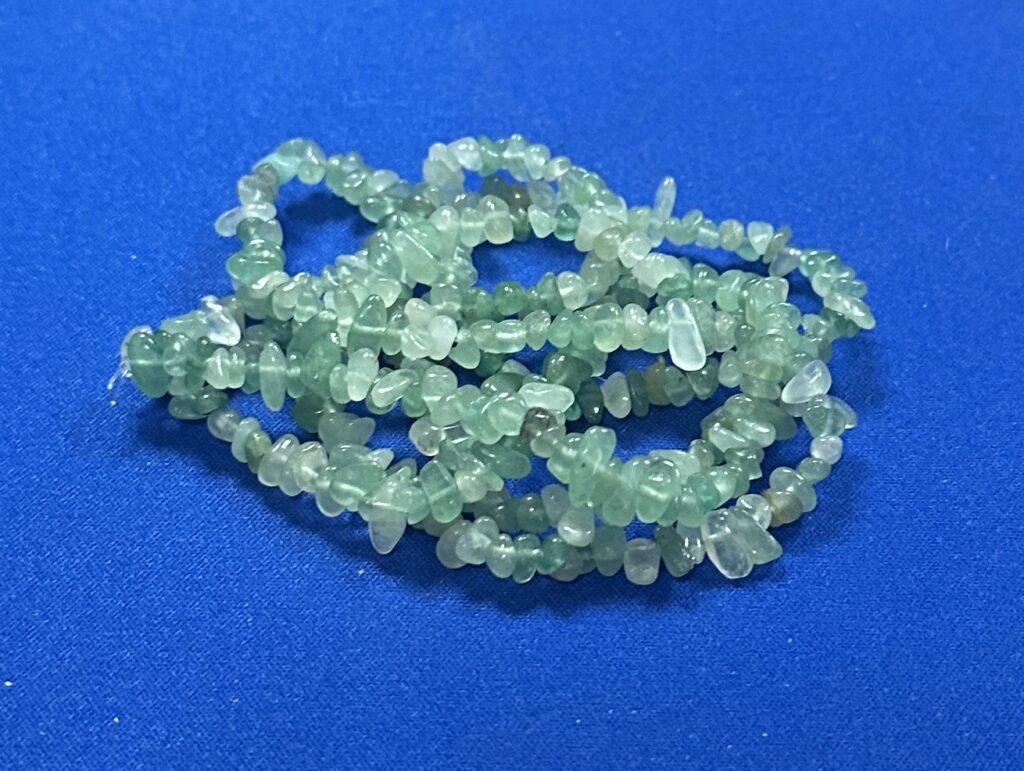
Quartz | Mohs Hardness 6.5–7 | Silicon Dioxide with Fuchsite | Metamorphic / Hydrothermal Formation
Material Overview
Green Aventurine is a variety of quartz recognized for its distinctive shimmering effect known as aventurescence. This subtle sparkle occurs when tiny mineral inclusions—most commonly fuchsite (a chromium-rich mica)—are suspended within the quartz crystal structure and reflect light.
The base mineral is silicon dioxide (SiO₂), the same fundamental structure that forms clear quartz, amethyst, citrine, and smoky quartz. What distinguishes aventurine is the presence of these mineral platelets embedded during formation.
Color ranges from soft mint green to deep forest green, depending on the concentration of fuchsite and the density of inclusions within the stone.
In jewelry, green aventurine is valued for its:
• Soft, natural color
• Subtle internal sparkle
• Durability and workability
• Large availability in bead and carving material
Because of its calming tone and approachable price point, aventurine is widely used in bracelets, cabochons, carvings, and decorative stonework.
Geological Formation
Green aventurine forms primarily in metamorphic and hydrothermal environments, where silica-rich fluids interact with chromium-bearing rocks.
As quartz crystallizes from these fluids, microscopic flakes of fuchsite mica become trapped inside the growing crystal structure. These inclusions align randomly within the stone and reflect light in a way that creates the characteristic glittering effect.
This optical phenomenon is called aventurescence, a term derived from the Italian word “a ventura,” meaning “by chance.”
Key formation conditions include:
• Silica-rich hydrothermal fluids
• Chromium-bearing host rock
• Slow crystal growth allowing mineral inclusion
• Moderate metamorphic pressure environments
Unlike many transparent quartz varieties, aventurine is typically translucent to opaque, as the inclusions scatter light within the stone.
Geographic Sources
Green aventurine deposits occur in several regions around the world. Each region tends to produce slightly different textures and color tones.
India
India is the largest producer of green aventurine used in jewelry. Material from southern India often shows vibrant green color and strong aventurescence.
Brazil
Brazilian aventurine tends to be slightly lighter in tone and frequently appears in larger rough deposits suitable for carving.
Russia (Ural Mountains)
Historic Russian deposits have produced high-quality material used in decorative stone objects and architectural inlays.
Other Sources
Additional deposits occur in:
• China
• Tanzania
• Nepal
• Spain
• Chile
Because quartz is abundant globally, aventurine can occur wherever the right mineral inclusions are present.
Mining and Preparation
Aventurine is typically mined through open-pit quarry methods where quartz-rich rock formations are extracted and processed.
After extraction, rough material is:
- Broken and sorted for color and texture
- Slabbed or cut into workable pieces
- Shaped into beads, cabochons, or carvings
- Polished to reveal the aventurescent sparkle
Unlike some gemstones, aventurine rarely undergoes chemical treatment. Most jewelry-grade material is simply cut and polished natural stone.
Because aventurine often occurs in large masses, it is ideal for bead production, which explains its popularity in stretch bracelets and handmade jewelry.
Jewelry Performance
Green aventurine performs well in jewelry applications.
With a Mohs hardness between 6.5 and 7, it is durable enough for daily wear in bracelets, necklaces, and earrings.
Strengths include:
• Good resistance to scratching
• Excellent polish retention
• Stable structure in bead form
• Attractive appearance even in matte finishes
For bracelets and beadwork, aventurine offers a balance of durability and affordability, allowing artisans to create designs that are both beautiful and accessible.
Historical Significance
The name aventurine originates from a fascinating accident in Italian glassmaking during the 18th century.
Venetian artisans reportedly spilled copper filings into molten glass, producing a shimmering effect that resembled natural aventurine stone. This glass became known as “aventurine glass.”
When geologists later studied natural stones with a similar glittering appearance, the name carried over.
Historically, aventurine has also been used in:
• Chinese carvings and talismans
• Russian decorative stonework
• European jewelry and ornamental objects
Because of its availability and attractive color, aventurine has long been used in both decorative arts and practical jewelry making.
Spiritual and Healing Traditions
Green aventurine is often referred to in metaphysical traditions as the “Stone of Opportunity.”
Many spiritual traditions associate the stone with:
• Prosperity and good fortune
• Emotional calm and optimism
• Personal growth and renewal
• Balance between heart and mind
In chakra traditions, green aventurine is connected with the heart chakra, which is believed to represent compassion, harmony, and emotional balance.
While scientific research does not support healing claims associated with gemstones, many people enjoy wearing natural stones as symbols of intention or personal meaning.
Use in Jewelry Design
Green aventurine is particularly well suited to bracelet designs, especially when paired with stones that contrast or complement its soft green color.
Common pairings include:
• Rose Quartz
• Black Obsidian
• Amethyst
• Tiger’s Eye
• Labradorite
At The Jewelers Bench, aventurine beads are often selected for designs that emphasize calm tones and balanced color palettes.
The subtle sparkle created by fuchsite inclusions gives aventurine a quiet character that works well in both minimalist jewelry and layered stone combinations.
Birthstone and Cultural Associations
Although aventurine is not an official birthstone, it is frequently associated with:
• Spring and renewal
• Prosperity and growth
• Heart-centered symbolism
• Nature and grounding
Its green color naturally connects it with themes of growth, vitality, and abundance across many cultures.
Scientific and Gemological References
For readers interested in deeper research on aventurine and quartz minerals, the following institutions maintain extensive gemological databases:
Gemological Institute of America (GIA)
https://www.gia.edu
Mindat Mineral Database
https://www.mindat.org
International Gem Society
https://www.gemsociety.org
Smithsonian National Gem Collection
https://naturalhistory.si.edu
These sources provide detailed scientific information about gemstone composition, deposits, and mineral classification.
The Jeweler’s Perspective
From a jeweler’s standpoint, aventurine is a material that rewards careful selection.
Because its character comes from mineral inclusions, every stone displays slightly different internal patterns.
When selecting beads for a bracelet or necklace, jewelers often look for:
• Consistent color tone
• Even distribution of sparkle
• Smooth polish
• Visual harmony between stones
Natural stone jewelry reflects the geological story of the earth, and aventurine captures this particularly well through the tiny reflective minerals suspended within the quartz.
Each bead carries a subtle reminder that nature’s processes rarely produce identical results.
Closing Notes
Green aventurine represents a meeting point between geology, craftsmanship, and personal symbolism.
Formed through natural mineral processes deep within the earth and shaped by artisans at the jeweler’s bench, the stone continues to find a place in modern jewelry design.
Whether appreciated for its natural sparkle, its calming green color, or the personal meaning someone associates with it, green aventurine remains one of the most approachable and versatile stones in the world of natural gemstone jewelry.