Freedom, Responsibility, and America’s Role in a Changing World
A discussion sparked by Spain’s stance on U.S. military bases raises larger questions about America’s role in promoting freedom and stability worldwide. As technology spreads information and liberty gains global appeal, what responsibility does the United States have in supporting democratic ideals and encouraging constructive global debate?
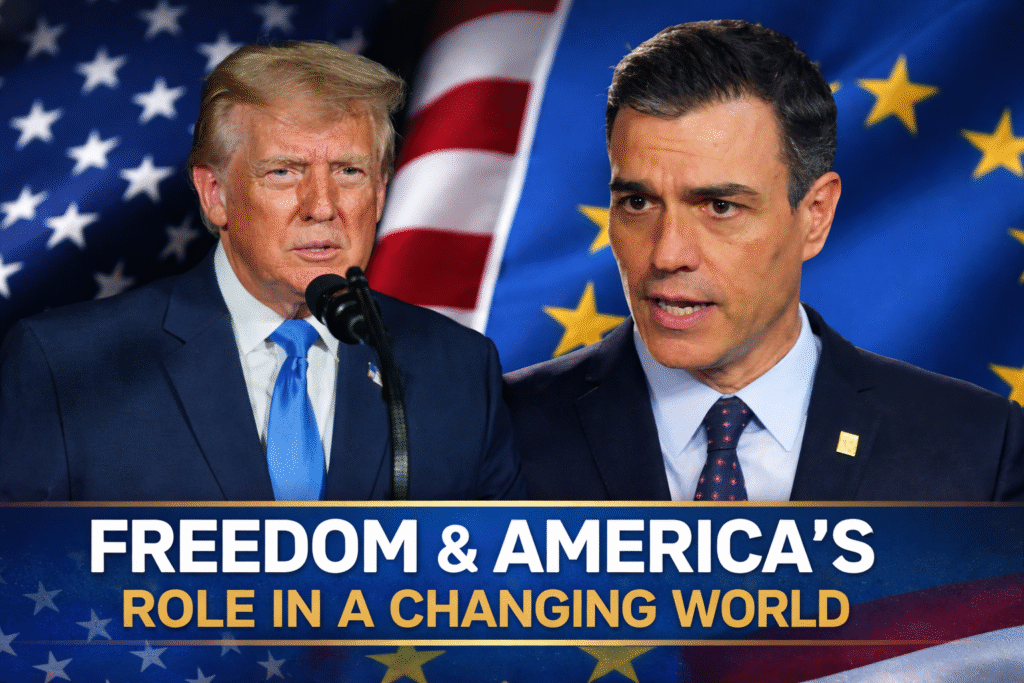
Debate over U.S. bases in Spain highlights a larger conversation about America’s role as a global leader in freedom, diplomacy, and international security.
Attempting to Understand a Complex Political, Religous, and Geographic Situation
Encouraging thoughtful discussion about liberty, leadership, and the global pursuit of freedom.
Recent comments from Spain’s Foreign Minister José Manuel Albares regarding U.S. military bases in Spain and their potential use in conflicts involving Iran sparked an interesting conversation about international responsibility and national values. Albares emphasized that U.S. bases would only be used within existing agreements and within the framework of the United Nations Charter.
Statements like this raise a larger question worth discussing openly:
What role should the United States play in promoting freedom and stability in the modern world?
This is not a simple issue, and reasonable people can disagree. But it’s an important conversation—especially in a time when technology, information, and global connectivity are rapidly changing how societies operate.
A World Connected by Information
For much of human history, governments maintained power partly because populations had limited access to information. When survival depended on securing food, shelter, and safety, and communication across borders was difficult, authoritarian systems could maintain tight control.
The world of 2026 is very different.
Technology has dramatically expanded access to information. People can see how others live, how economies function, and how societies organize themselves. The idea that individuals should have the freedom to speak openly, pursue opportunity, and participate in shaping their own future has become increasingly visible across the globe.
In many ways, the American concept of freedom has become one of the most widely recognized political ideas in the modern world.
The American Experiment
The United States is not a perfect country—no nation is. But in just a few hundred years, the American experiment has demonstrated the power of certain core principles:
- Individual liberty
- Freedom of speech and religion
- The rule of law
- The opportunity to pursue prosperity through work and innovation
These ideas have influenced political movements and reform efforts around the world.
Whether people ultimately agree with American policies or not, the underlying ideals of personal freedom and opportunity resonate with many cultures and societies.
Distinguishing Governments from People
When discussing countries involved in geopolitical tensions, it’s important to separate governments from the citizens who live under them.
Most people everywhere—whether in Iran, Europe, the United States, or elsewhere—share very similar aspirations:
- Stability
- Safety
- Economic opportunity
- The ability to raise families in peace
- The freedom to practice their beliefs
Political conflicts are often driven by leadership decisions, strategic interests, and historical tensions—not by the everyday wishes of ordinary people.
This distinction is crucial when discussing international policy or global leadership.
The Challenge of Global Institutions
Organizations like the United Nations were created with the goal of preventing conflict and encouraging cooperation between nations.
Supporters see them as an important forum for diplomacy.
Critics argue that they can become slow-moving bureaucracies that struggle to respond effectively to urgent problems.
Both perspectives appear frequently in public debate.
The larger issue may not be whether global institutions exist, but how effective they are at protecting the rights and security of real people living under difficult circumstances.
The Universal Appeal of Freedom
Across history and cultures, the desire for freedom has appeared again and again.
When people protest corruption, demand accountability from leaders, or advocate for personal liberty, they are expressing something deeply human: the desire to shape their own future.
Technology has amplified these voices.
Social media, independent journalism, and global communication have made it harder for governments to completely control information or suppress dissent without the world noticing.
This does not mean change happens quickly or easily—but it does mean the conversation is no longer confined within national borders.
America’s Role as a Global Leader
The United States has long described itself as a defender of democratic values and individual liberty.
That role brings both influence and responsibility.
Leadership in the modern world does not simply mean military strength. It also means demonstrating how a society can function with:
- open debate
- political competition
- economic innovation
- respect for diverse beliefs and cultures
In many ways, the most powerful influence America has is not force—it is example.
A society that values freedom, opportunity, and human dignity sends a powerful message about what is possible.
The Risk of Unintended Consequences
At the same time, international politics are complex.
History shows that actions taken with good intentions can produce unintended results. Military interventions, economic sanctions, and diplomatic strategies all carry risks.
This reality makes thoughtful debate essential.
Citizens should question policies, analyze outcomes, and engage in respectful dialogue about the best path forward.
Strong democracies rely on informed public discussion, not unquestioned consensus.
Encouraging Constructive Debate
Topics involving international relations, national security, and freedom can quickly become emotional or divisive.
But meaningful progress often comes from conversations where people are willing to listen as well as speak.
Some questions worth considering include:
- What responsibilities do free nations have when people in other countries seek political reform?
- How should global institutions adapt to modern challenges?
- What role should technology play in spreading information and accountability?
- How can countries promote freedom without destabilizing regions or creating unintended consequences?
These are complicated issues, and no single perspective holds all the answers.
Freedom as a Shared Human Aspiration
Despite political differences across the world, one idea continues to appear again and again:
People want the ability to live with dignity, pursue opportunity, and participate in shaping their future.
That aspiration transcends borders, cultures, and religions.
The long-term challenge for global leadership—including the United States—is finding ways to support those aspirations while maintaining stability, peace, and respect for international relationships.
An Invitation to Discuss
The goal of this article is not to offer a final answer, but to encourage thoughtful discussion.
Freedom, leadership, and international responsibility are topics that affect everyone living in an interconnected world.
What role should America play moving forward?
How should nations balance sovereignty with the global desire for liberty?
Constructive debate—grounded in respect and careful thinking—is one of the strongest tools democratic societies have.
And it’s a conversation worth continuing.
About Author