Quartz | Mohs Hardness 7 | Iron-bearing Silica | Volcanic / Hydrothermal Formation
Material Overview
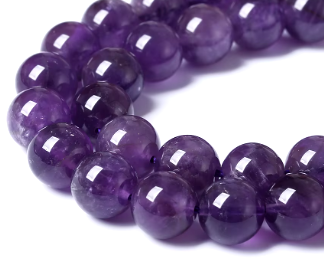
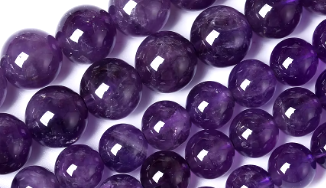
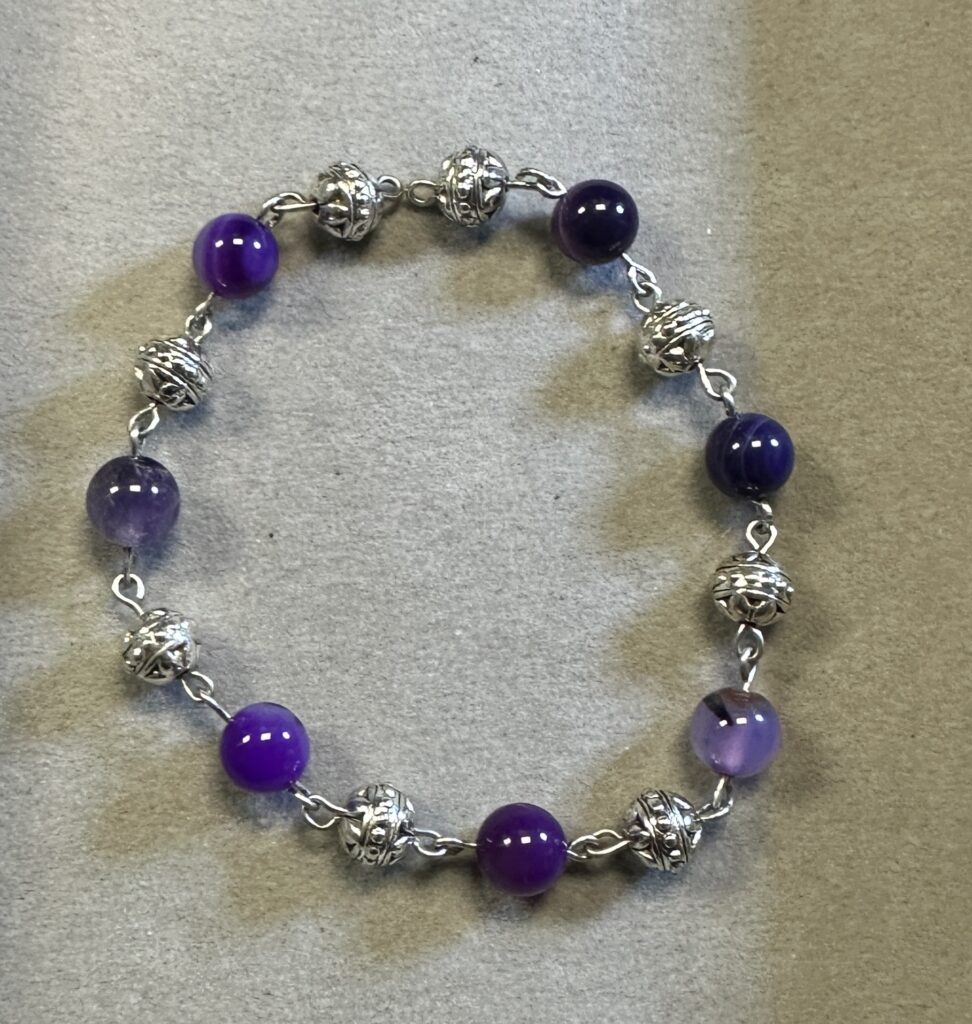
Amethyst is the violet variety of quartz, one of the most widely recognized gemstones in the world. Its color ranges from pale lavender to deep royal purple depending on the concentration of iron impurities within the crystal lattice and the natural radiation exposure during formation.
Chemically, amethyst is silicon dioxide (SiO₂), the same mineral that forms clear quartz, citrine, and smoky quartz. What distinguishes amethyst is the presence of trace iron combined with natural irradiation within the host rock. This combination alters the crystal’s internal structure and produces its distinctive violet coloration.
Despite the simplicity of its chemical composition, amethyst demonstrates remarkable variability in color saturation, zoning patterns, and crystal habit depending on where and how it forms.
Quartz minerals like amethyst are among the most stable and durable materials used in jewelry, which helps explain why amethyst has been valued across civilizations for thousands of years.
Geological Formation
Most commercial amethyst forms inside volcanic geodes. These geodes begin as gas bubbles trapped within cooling lava flows. Over time, mineral-rich groundwater carrying dissolved silica slowly infiltrates the cavities.
As these fluids cool and pressure changes occur, silica crystallizes along the inner walls of the cavity, gradually forming quartz crystals. When trace iron is present in the fluid and natural radiation occurs within the surrounding rock, the growing quartz crystals develop the violet coloration associated with amethyst.
Many geodes form over millions of years, producing crystal clusters that can range from a few inches to several meters in size.
Common formation environments include:
• Basalt lava flows
• Hydrothermal veins
• Volcanic geodes
• Metamorphic environments with silica-rich fluids
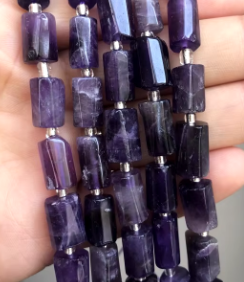
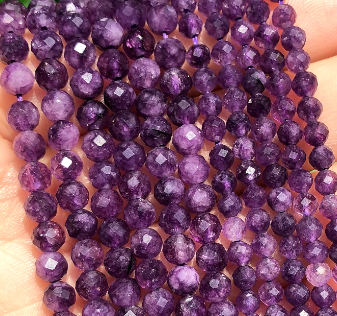
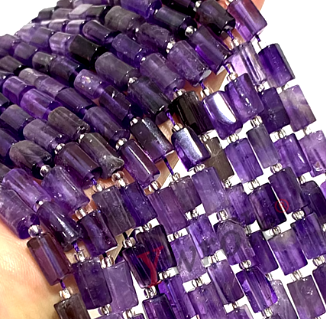
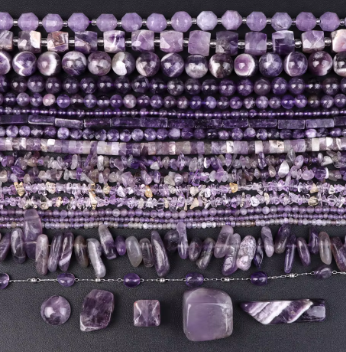
Within a single crystal, color zoning is common. This occurs when the conditions of crystal growth change during formation. In beads and polished stones, this can appear as subtle variations in color across the stone.
Geographic Sources
Amethyst deposits are found worldwide, but certain regions are particularly known for distinctive material.
Brazil
Brazil is one of the largest producers of amethyst. Brazilian stones often show lighter lavender tones and large geode formations.
Uruguay
Uruguayan amethyst is known for its deep, saturated purple color and smaller but intensely colored crystals.
Zambia
Zambian amethyst is darker and often shows strong color zoning, giving the material a dramatic appearance in jewelry.
Other Sources
Additional deposits are found in:
• Bolivia
• Russia (Ural Mountains)
• South Korea
• India
• Madagascar
• United States (Arizona, North Carolina)
Each region produces material with slightly different color tones and crystal structures.
Mining and Preparation
Amethyst mining typically occurs through open-pit extraction or by removing geodes from volcanic basalt deposits.
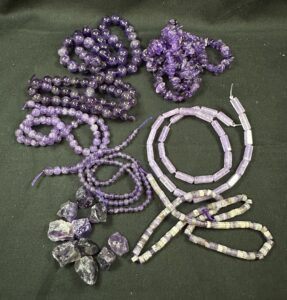
Large geodes are carefully opened to reveal the crystal interior. These clusters are either sold as specimens or processed for jewelry production.
The preparation process usually involves:
- Removing the crystal clusters from host rock
- Sorting material by color and clarity
- Cutting or shaping stones for jewelry
- Tumbling or polishing for beads and cabochons
Most amethyst used in jewelry is untreated, though heat treatment is sometimes used to convert amethyst into citrine.
When heated to approximately 470–560°C, amethyst can change color to yellow or orange, producing the stone known as citrine.
Jewelry Performance
Amethyst performs exceptionally well in jewelry.
With a Mohs hardness of 7, it is durable enough for most jewelry types including bracelets, rings, pendants, and earrings.
Advantages in jewelry design include:
• Excellent polish retention
• Resistance to scratching from everyday wear
• Wide availability in bead and faceted forms
• Stable crystal structure
However, prolonged exposure to strong sunlight may gradually fade some stones, particularly lighter colored material.
For this reason, jewelers typically recommend avoiding long periods of UV exposure.
Historical Significance
Amethyst has a long and fascinating history across many cultures.
The name “amethyst” comes from the Greek word amethystos, meaning “not intoxicated.” Ancient Greeks believed the stone protected against drunkenness and carved drinking vessels from the material.
In ancient Rome, amethyst was also worn as a symbol of sobriety and clarity of mind.
During the Middle Ages, amethyst became associated with royalty and the church, appearing in the jewelry of bishops and monarchs. The stone symbolized spiritual wisdom and moral restraint.
Historically, amethyst was once considered as valuable as ruby or sapphire until large deposits were discovered in Brazil during the 19th century, dramatically increasing availability.
Today, it remains one of the most beloved gemstones in the world.
Spiritual and Healing Traditions
Across cultures, amethyst has been associated with calmness, clarity, and emotional balance.
In many spiritual traditions, amethyst is believed to support:
• Mental clarity
• Emotional stability
• Protection from negative influences
• Spiritual awareness
• Meditation and mindfulness
Amethyst is often linked with the crown chakra, which in many belief systems represents consciousness and spiritual connection.
While modern science does not confirm healing properties of gemstones, many people find symbolic meaning and emotional comfort in the stones they wear.
Jewelry made from natural stones often becomes personal in this way — part adornment, part story.
Use in Jewelry Design
Amethyst is particularly versatile in jewelry making.
It is commonly used in:
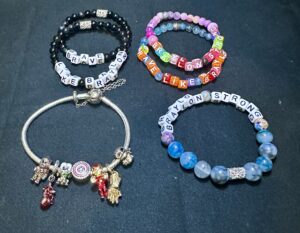
• Stretch bead bracelets
• Faceted gemstone rings
• Pendant necklaces
• Carved crystal pieces
• Custom message bracelets
Because the color pairs well with both silver and gold, amethyst appears in designs ranging from simple everyday jewelry to ornate statement pieces.
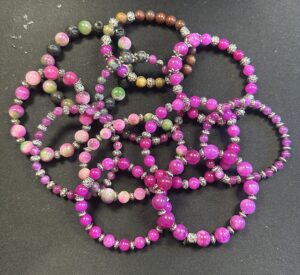
At The Jewelers Bench, amethyst is frequently paired with complementary stones such as:
• Rose Quartz
• Black Obsidian
• Labradorite
• Lapis Lazuli
These combinations highlight both contrast and harmony within a design.
Birthstone and Cultural Associations
Amethyst is the birthstone for February.
It is also traditionally associated with:
• The zodiac sign Pisces
• The 6th wedding anniversary
• Symbols of peace, protection, and humility
Because of these associations, amethyst is frequently chosen for meaningful or personalized jewelry pieces.
Scientific and Gemological References
For readers interested in deeper research, the following resources provide authoritative information about amethyst and quartz minerals:
• Gemological Institute of America (GIA) – https://www.gia.edu
• Mindat Mineral Database – https://www.mindat.org
• Smithsonian National Gem Collection – https://naturalhistory.si.edu
• International Gem Society – https://www.gemsociety.org
These institutions maintain extensive scientific and gemological records related to gemstone properties and mineral deposits worldwide.
The Jeweler’s Perspective
At the bench, stones are more than geological materials.
Every bead carries subtle variations created by the earth itself — differences in color, inclusions, and crystal growth patterns. These variations make natural stone jewelry unique.
When selecting amethyst for jewelry, jewelers typically consider:
• Color saturation
• Transparency
• Consistency between beads
• Surface polish
• Overall harmony within the design
The goal is not perfection, but balance.
Natural stone jewelry reflects the material as it formed in nature.
Closing Notes
Amethyst is one of the few gemstones that bridges science, history, art, and symbolism in equal measure.
From volcanic geodes deep within the earth to handmade bracelets worn every day, the journey of this stone is long and remarkable.
Whether valued for its beauty, its geological story, or the personal meaning someone attaches to it, amethyst continues to hold a place in jewelry traditions around the world.